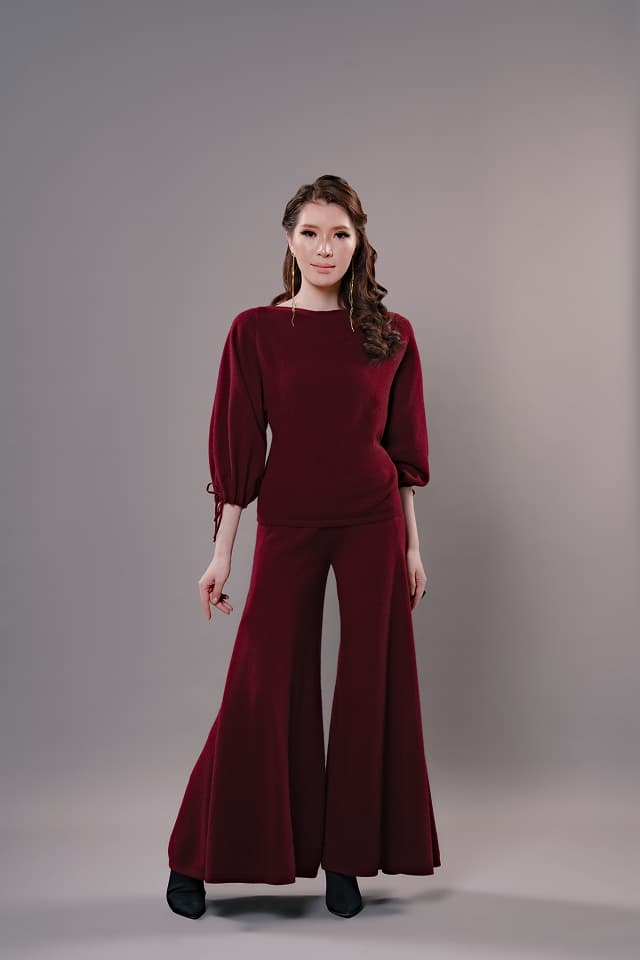
When it comes to luxury cashmere, Mongolia is the undisputed reference. For centuries, nomadic herders have crossed the vast Mongolian steppes with their herds of goats, respecting tradition and nature.
When it comes to luxury cashmere, Mongolia is the undisputed reference. For centuries, nomadic herders have crossed the vast Mongolian steppes with their herds of goats, respecting tradition and nature.
The extremely harsh climate, where winter temperatures can fall below -40 °C, leads the goats to grow a particularly fine and dense undercoat. It is precisely this natural fibre that becomes the cashmere renowned around the world for its exceptional softness.
At Royal Cashmere in Brussels, we select garments made from 100% Mongolian cashmere to offer our customers authentic, lasting quality.
The quality of a cashmere fibre depends mainly on its diameter.
The finer the fibre, the softer it feels.
Mongolia's vast plains offer the goats an ideal natural environment:
Rather than shearing, the down is collected by combing when the goats naturally shed their undercoat. This method respects the animal and yields the finest fibres.
Few people know that a goat produces only 150 to 250 grams of usable down a year.
After several stages of sorting, cleaning and spinning, this amount is only enough to make a few accessories or a single jumper, depending on its thickness.
This rarity explains why a genuine cashmere garment is a lasting investment.
Choosing a Mongolian cashmere garment brings many benefits.
The fineness of the fibres feels unique against the skin.
Cashmere holds in warmth while staying breathable. It is just as pleasant in winter as on cooler evenings.
A cashmere jumper is much lighter than a classic wool one, yet offers more warmth.
When properly cared for, a cashmere garment can keep its beauty for many years.
With cashmere so popular, many different qualities are on the market.
Here are a few essential criteria:
At Royal Cashmere, every piece is selected to meet these quality standards.
Shopping in a specialist boutique lets you:
Our boutique in Uccle welcomes Brussels residents and visitors alike who are looking for genuine Mongolian cashmere.
Unlike fast fashion, cashmere is made to last.
A quality jumper can be worn for more than ten years when it is properly cared for.
Choosing a timeless garment is also a more responsible way to shop, putting quality before quantity.
Whether you are looking for an elegant jumper, a refined scarf or a cashmere coat, our collection celebrates Mongolian craftsmanship and exceptional materials.
We look forward to welcoming you to our boutique in Uccle, near Brussels, to discover the softness of genuine Mongolian cashmere.